English
 Español
 Português
 Tiếng Việt
 Türk
 简体中文

Sewing buttons is routine work in garment production, but it matters more than it looks. A button is a small detail that decides how a garment fastens, wears, and presents. On shirts, coats, uniforms, trousers, and other textile products, buttons have to be attached firmly and the same way every time. That makes button sewing a core step in apparel manufacturing.
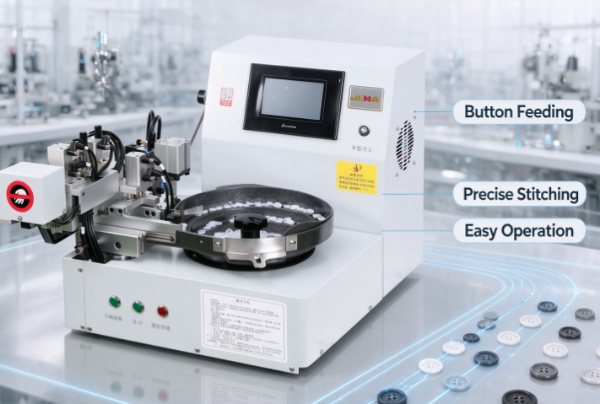
Clothing production is getting more organized, and manufacturers are looking harder at the equipment behind each individual operation. A button sew machine takes over the job of attaching buttons to fabric. It cuts down repetitive hand work and helps keep results consistent from batch to batch.
Knowing how the machine is built, and how its parts cooperate, helps garment manufacturers, production managers, and operators make better decisions. Mechanical design, button positioning, needle movement, and control functions all shape the sewing process. Each part has its own job, and how well they work together decides how efficiently a button gets attached.
What Is a Button Sew Machine and Why Is It Used in Garment Production?
A machine is a specialized sewing machine built to attach buttons. A general-purpose machine joins fabric pieces or makes decorative stitches. This one concentrates on fixing a button in place.
In garment production, button attachment happens over and over. One garment may need several buttons, and production lines often process large quantities of similar items. Doing the job by hand takes time and can lead to uneven button placement or stitch quality.
The machine answers this with a controlled sewing process. It holds the fabric and button steady while the needle stitches through the buttonholes and the material beneath. Then it repeats the operation according to the chosen sewing pattern.
It isn't tied to one garment type. Clothing differs in button style, material, and attachment needs. The machine can be used for:
- Shirts and blouses that need regular button fastening.
- Jackets and coats with functional or decorative buttons.
- Trousers and skirts with buttons at waistbands and closures.
- Workwear and uniforms that need consistent attachment.
- Children's clothing and casual garments with varied button designs.
- Textile accessories that use buttons to fasten or decorate.
Its value lies in turning a small, repetitive task into a controlled production step. Operators can then concentrate on fabric positioning, button selection, and quality checks instead of sewing every stitch by hand.
What Are the Main Components of a Button Sew Machine?
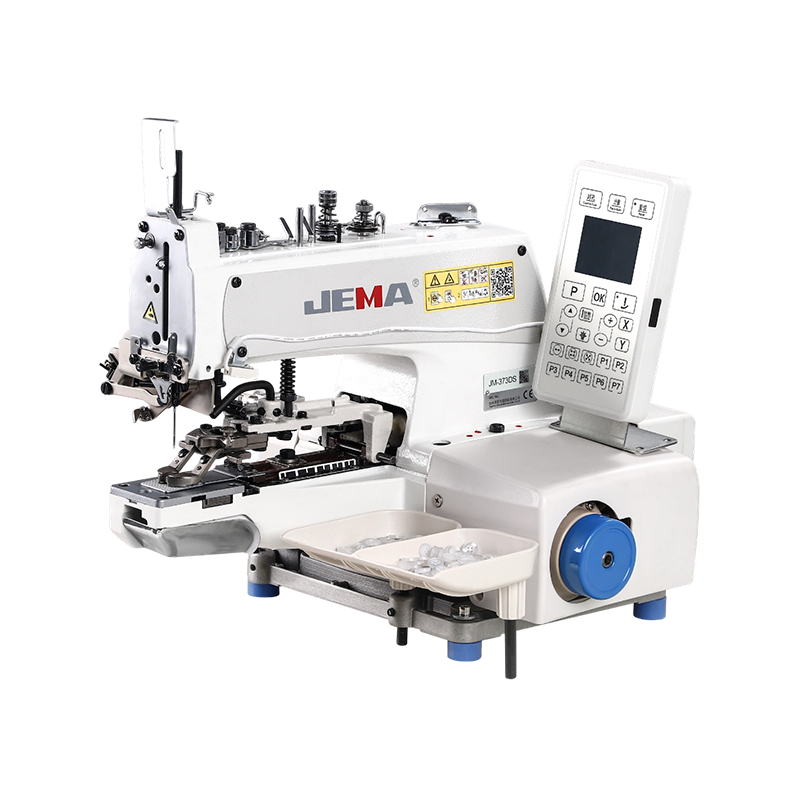
Designs vary, but most button machines share a set of basic mechanical and operating parts. Together they position the button, guide the needle, control the thread, and finish the sewing cycle.
Machine Head and Body
The head houses the main sewing mechanism. It carries the needle assembly and the other moving parts involved in attaching a button. Its inner structure coordinates the motion needed to form stitches.
The body supports the operating system and keeps the machine steady during sewing. Stability counts, because repeated needle motion and fabric handling can throw off accuracy if the machine isn't well supported.
Needle Assembly
The needle assembly passes the thread through the buttonholes and fabric. Its movement determines how stitches form and how the button is secured.
It has to work in step with the button position. If the button shifts mid-cycle, the needle may miss the intended holes, leaving uneven stitching or a badly attached button.
Button Clamp
The clamp holds the button in place during sewing. It's the most recognizable part of this machine type, since it handles the item being attached.
Buttons come in many shapes and sizes, so the holding mechanism must suit the button in use. Good positioning prevents movement and keeps stitch placement consistent.
Fabric Support and Work Area
The work area is the surface where the garment is positioned. The operator places fabric under the needle and lines up the intended button location with the sewing mechanism.
Depending on the design, the support area may have guides or other positioning aids. These help operators manage different garment sections during production.
Thread Control System
This system manages thread movement and tension. Its components guide the thread through the machine and keep conditions right for stable stitches.
Tension matters. Loose or overly tight stitches affect how well the button holds. The system should let thread run smoothly while keeping stitching consistent.
Control and Drive Mechanism
The drive mechanism supplies the motion for sewing and coordinates the needle with the other moving parts.
The control system runs the sewing cycle and lets the operator start, stop, or adjust the machine, depending on the design. Some machines add automatic functions that reduce manual operation.
Each component has its own duty, yet none works alone. The clamp, needle assembly, thread system, and drive mechanism must stay in sync throughout the cycle.
How Does a Button Sew Machine Work?
The process rests on controlled needle movement and accurate button positioning. Details differ between machine types, but the general sequence is similar.
Preparing the Fabric and Button
Before sewing, the operator picks the right button and prepares the garment section. The fabric goes on the work area with the attachment point under the sewing mechanism.
The button then goes into the clamp, with its holes lined up along the needle's path. This alignment matters because the needle must pass through the holes without striking the button surface.
Securing the Button
With the button positioned, the holding mechanism keeps it steady so it won't move when the needle starts.
The fabric must stay put as well. If the button or the garment shifts during sewing, the finished attachment may fall short on appearance or strength.
Forming the Stitches
The needle travels through the buttonholes and fabric, carrying thread through the material. Repeated strokes build up stitches that connect the button to the garment.
The stitch layout depends on the button design and the selected sewing pattern. A two-hole button, for instance, needs a different arrangement from a four-hole one.
The thread control system keeps thread moving evenly during this stage. Each stitch should form without needless slack or excess tension.
Completing the Sewing Cycle
Once the required stitches are done, the machine ends the operation. Depending on the model, it may stop automatically and handle thread-related steps itself, or the operator may do some finishing by hand.
The button is then released from the holder, and the operator inspects the result before the garment moves on.
This makes button attachment a repeatable operation. When fabric positioning, button holding, and needle movement are well coordinated, results stay consistent across many garments.
What Types of Button Sew Machines Are Commonly Used?
Button machines come in several designs to suit different manufacturers. They differ mainly in operating method, sewing patterns, and degree of automation.
Mechanical Button Sew Machines
Mechanical models control sewing through a traditional mechanical structure. Operation depends on coordinated movement among the needle, button holder, and drive system.
They're usually linked to straightforward button attachment. The direct structure can make routine maintenance and operator training easier to organize.
They may fit workshops where button styles and sewing requirements stay fairly constant.
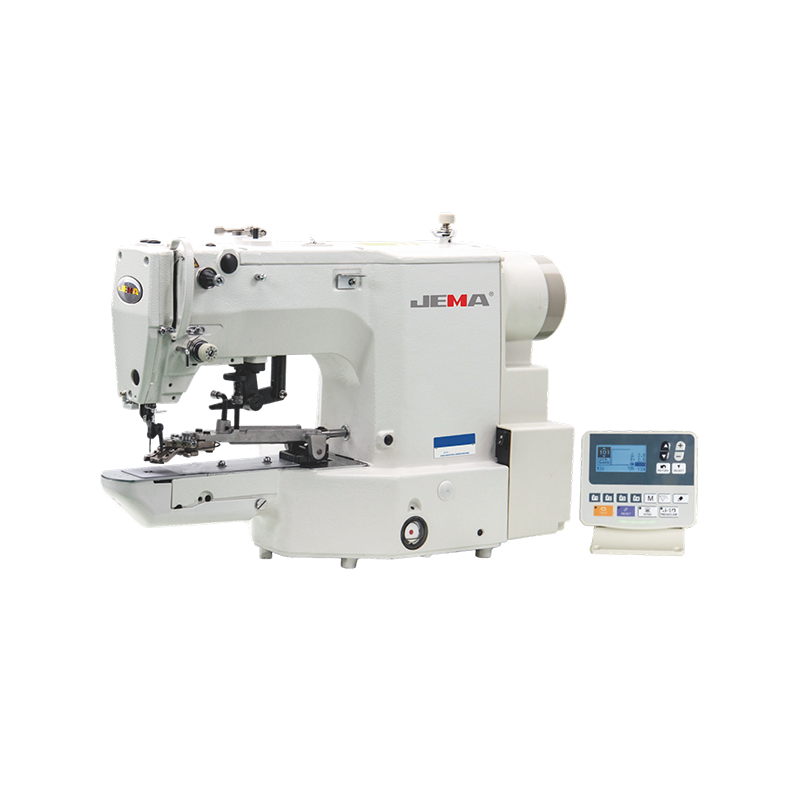
Electronic Button Sew Machines
Electronic models manage sewing through electronic controls. Depending on the design, operators may choose sewing patterns and adjust certain functions from a control panel.
Such equipment can meet different attachment needs without relying wholly on mechanical adjustment. It may also include automatic functions that cut down repetitive operator actions.
For manufacturers running several garment styles, electronic control makes production changeovers easier to handle.
Automatic Button Sew Machines
Automatic machines carry out several stages of the operation with little manual input. Depending on configuration, they may offer automatic thread handling, button positioning help, and controlled sewing cycles.
These functions trim repetitive tasks and support a more organized workflow. Operators still need to check fabric placement, button compatibility, and the quality of the finished stitching.
Specialized Button Sewing Equipment
Some machines are built for particular button styles or garment uses. They may handle unusual button shapes, special sewing arrangements, or demanding fabrics.
Thick materials, for example, may need different handling from lightweight shirts. Decorative buttons may also call for a different attachment method than ordinary fastening buttons.
The right choice depends on the products being made and the sewing operation required.
How Do Different Components Affect Button Sewing Quality?
Quality depends on more than needle and thread. Several machine components shape the result, and a problem in one area can spoil the whole operation.
Needle Positioning and Movement
The needle has to enter the correct holes on every cycle. If its movement isn't coordinated with the button holder, it may hit the button or sew in the wrong spot.
Steady needle movement also gives an even stitch pattern. That matters when buttons must look uniform across a product range.
Button Holding Stability
The clamp must grip the button firmly without harming its surface. Too much movement gives irregular stitches, while the wrong holding pressure can mark delicate buttons.
Button material needs thought too. Plastic, metal, wood, and others react differently to pressure and handling.
Thread Tension and Feeding
Tension affects how the finished stitches look and hold. Too loose, and the button isn't pulled firmly against the fabric. Too tight, and the thread may fray or stress the attachment point.
Thread feeding must run smoothly as well. Uneven feeding can interrupt the cycle and make the output inconsistent.
Fabric Handling
Fabric thickness, flexibility, and surface traits all influence button sewing. Light materials shift easily, while thick or layered fabrics need more careful positioning.
The operator must keep the garment stable during sewing. The work area and holding arrangement should suit the material being processed.
Machine Stability
A stable structure supports consistent movement. Loose components, worn mechanical parts, or poor installation can disturb the relationship between needle and button holder.
Regular inspection catches these issues before they turn into repeated sewing defects.
What Is the Difference Between a Button Sew Machine and a General Sewing Machine?
Both use needles and thread to make stitches, but their intended jobs differ.
A general sewing machine handles a broad range of operations. It joins fabric panels, sews hems, makes seams, and does decorative stitching. Its structure supports varied fabric movement and sewing paths.
A machine is made specifically for attaching buttons. Its holding mechanism and controlled needle movement stitch through buttonholes while keeping the button in place.
A few basic functions show the contrast.
| Comparison | Button Sew Machine | General Sewing Machine |
|---|---|---|
| Main purpose | Attaching buttons to fabric | Joining and stitching fabric |
| Workpiece handling | Uses a button holding mechanism | Uses a fabric feeding arrangement |
| Sewing movement | Follows a button attachment pattern | Supports different sewing paths |
| Typical operation | Repeated button attachment | Various garment sewing tasks |
| Application | Buttons on clothing and textile products | Seams, hems, garment assembly, and decoration |
The distinction matters when planning equipment for garment production. A dedicated machine lets button attachment stand apart from general assembly.
It also lets production teams organize tasks by equipment need. General machines build the garment, and the machine finishes the fastening details.
How Should Operators Maintain a Button Sew Machine?
Regular maintenance keeps the machine in good working order. Its parts move constantly during production, so routine checks are needed to spot wear, thread problems, and mechanical faults.
Keep the Machine Clean
Dust, fabric fibers, and thread scraps build up around the needle area, clamp, and other moving parts. Left alone, they can interfere with normal operation.
Clean according to the manufacturer's instructions, and pay special attention to places where lint and thread waste collect.
Inspect the Needle Regularly
The needle takes part in every cycle. A bent, blunt, or damaged one hurts stitch formation and may mark the fabric or button.
Check its condition and replace it when needed. The new needle must also suit the fabric and thread in use.
Check Thread Movement
Thread should run through the machine smoothly. Look along the thread path for tangles, damage, or wrong threading.
If stitches turn loose or uneven, check tension and feeding. Those symptoms can also point to trouble in other sewing components.
Examine the Button Clamp
The clamp should grip buttons firmly and let go without difficulty. Wear or misalignment can throw off button positioning.
Make sure the holding mechanism is clean and working correctly. Follow the operating instructions for any adjustment.
Lubricate Moving Components
Some machine structures need regular lubrication to cut friction between moving parts. Follow the manufacturer's recommendations.
Too little lubrication can speed wear, while poor practice can cause other problems. Don't oil areas that aren't meant to be lubricated.
Check Electrical and Control Systems
On electronically controlled machines, the control panel, wiring, and functions need attention too. Any odd response, unstable operation, or electrical issue should go to qualified maintenance staff.
These habits reduce unexpected stoppages and help production run steadily.
What Should Manufacturers Consider When Selecting a Button Sew Machine?
Choosing a machine starts with the real needs of your production process. One that suits a certain product category may not suit another.
Manufacturers should weigh several factors before buying.
Button Types and Sizes
Button shape, material, thickness, and hole layout all affect sewing. The machine should work with the buttons used in regular production.
A shirt maker may handle mostly conventional buttons, while an outerwear producer may use larger or thicker ones. The holding mechanism and sewing pattern should match.
Fabric Characteristics
Fabric type matters too. Light woven cloth, knits, denim, and heavy outerwear fabrics all behave differently under the needle.
Check whether the machine can handle your common materials without damaging fabric or producing uneven attachment.
Production Requirements
Volume and workflow influence the choice. A shop doing small batches has different needs from a factory making large runs of similar garments.
Automatic functions can pay off when button attachment is frequent and repetitive. Still, consider whether the machine's features fit your actual workflow.
Ease of Operation
Operators should find the machine manageable. Clear controls, reachable adjustment points, and simple procedures ease training.
They should know how to position buttons, adjust the machine, and spot common sewing problems.
Maintenance and Technical Support
Factor in upkeep. Manufacturers need to know how routine cleaning, part replacement, and adjustments are handled.
Operating instructions, spare parts, and technical support all affect how easily the machine can be maintained over time.
Production Space and Workflow
The machine has to fit the available floor area. Its placement should let operators handle garments comfortably and pass finished items to the next operation.
A well-planned layout cuts unnecessary movement and makes button attachment easier to coordinate with other garment manufacturing steps.